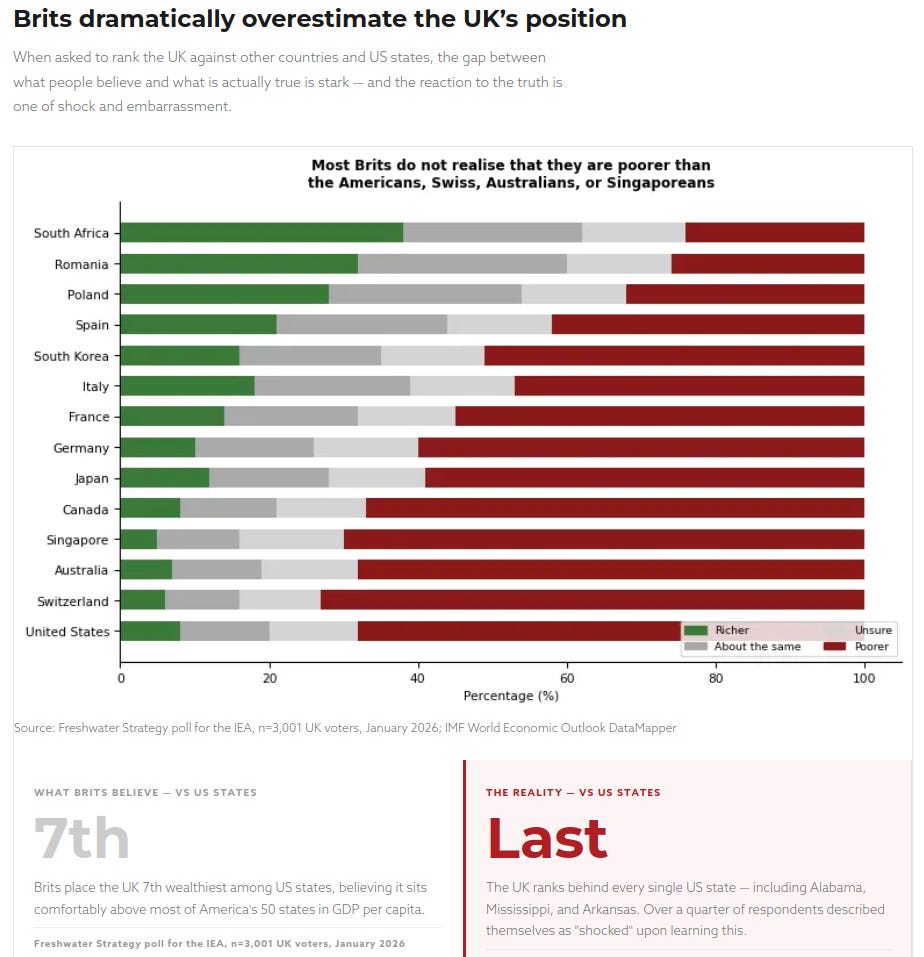
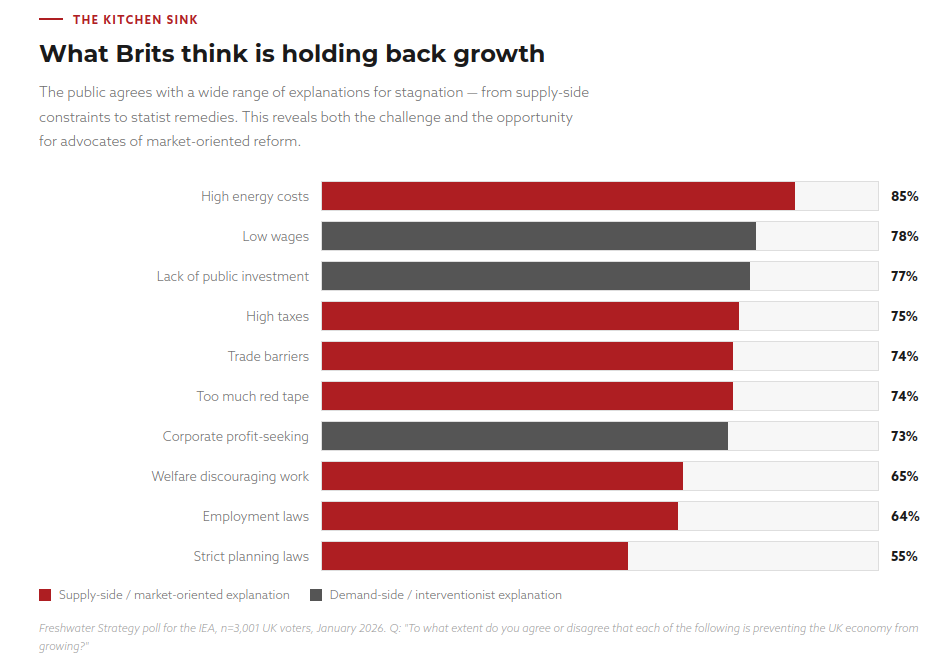
https://iea.org.uk/attitudes-to-economic-growth
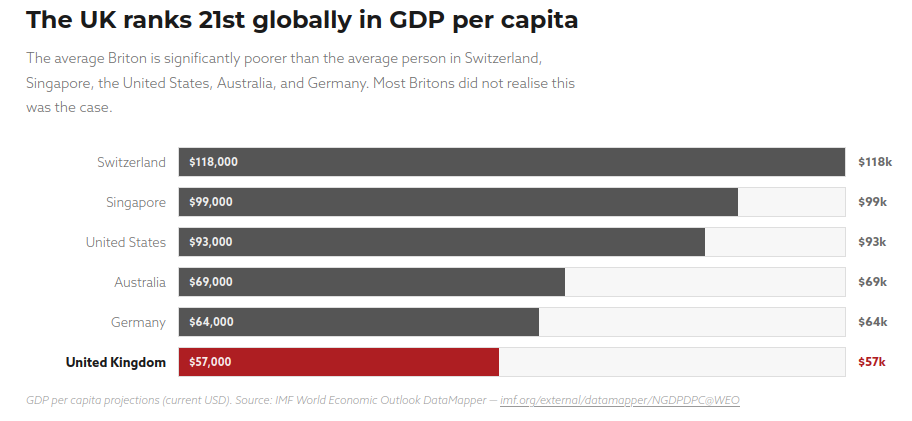
The state continues to act as though the UK is a top-level global powerhouse. The average person doesn't know they are living in a country that has fallen this far because the state-controlled media, and the BBC specifically, focuses on headline GDP (the total size of the economy) rather than the per capita wealth that actually determines how well-off the people are.
“The UK economy grew by 0.3% in March, despite the Iran war starting that month.
The ONS said there was some evidence that consumers and businesses had brought forward spending in March because of fears that the conflict would put up fuel and food prices.
The March increase followed another unexpected jump in February, and means that GDP grew by 0.6% during the first three months of the year. That was also higher than predicted.
However, analysts think the conflict will bring down GDP in the next three-month period, between April and June, when further price rises are likely.
The Bank of England has already warned that it expects UK inflation to increase as a result of the war, possibly reaching 6% in the worst-case scenario.
In April, the International Monetary Fund (IMF) said it expected the war to hit the UK the hardest of the world’s advanced economies.
However, in May the IMF forecast the UK’s economy would grow by 1% this year, up from its previous estimate of 0.8%.”
https://www.bbc.co.uk/news/articles/c0j7p38jg15o
“The British economy is showing far more resilience than expected by many economists…
Every nation in the world has been hit by the Iran War, so it is interesting to compare the UK with the rest of the G7.
It is currently the fastest growing of these major economies…”
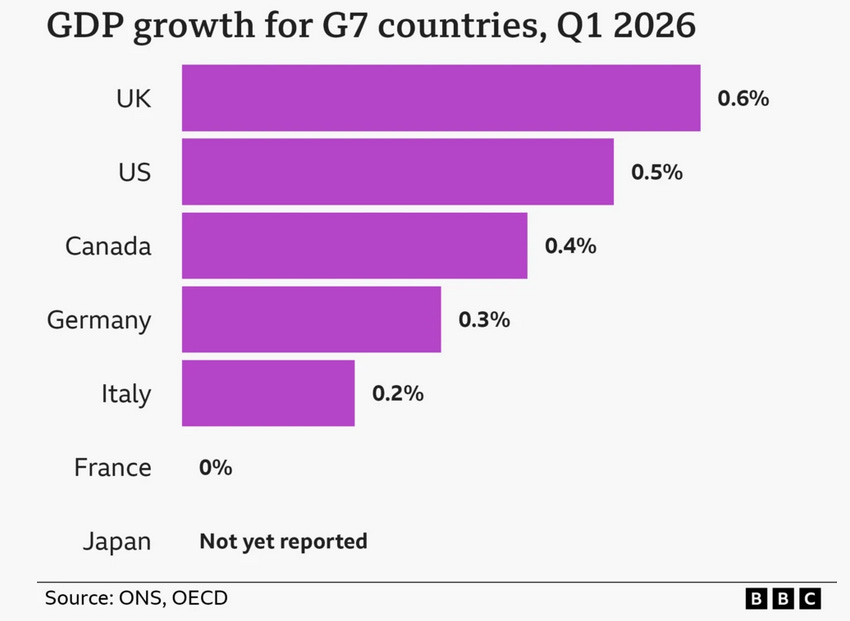
The state broadcaster relies on a recurring set of rhetorical tactics to manipulate public perception of the economy. By analyzing their reporting on both the Q1 2026 growth figures and the Iran-related resilience narrative, a clear pattern emerges: the state is systematically misrepresenting reality to mask long-term decline.
In both reports, the BBC uses short-term, isolated data points - such as a 0.6% quarterly growth figure - to craft a narrative of national success. This is a deliberate strategy to distract from the broader, structural reality of the last six years. By focusing on the "fastest growing in the G7" for a single quarter, they create a false sense of success.
The Reality:
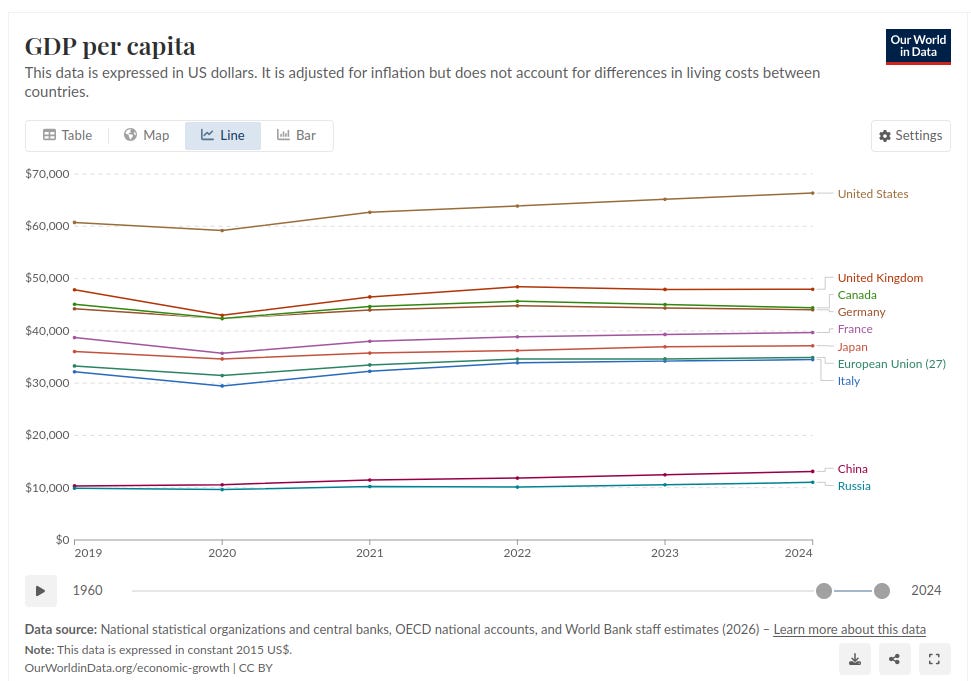
When viewed cumulatively since 2019, the UK’s growth of 6.0% pales in comparison to the US (15.2%) or Canada (11.4%). That 9.2 percentage point gap isn't just a statistic; it is the realized loss of potential national wealth that a temporary quarterly blip cannot correct.
The broadcaster repeatedly labels the current economic state as resilient, even when their own data admits the opposite.
It frames fear-driven consumer panic, such as the pre-emptive spending in March caused by fears of food and fuel price rises, as evidence of economic strength.
The Reality:
A truly resilient economy grows through innovation and productivity, not through citizens scrambling to purchase fuel before a conflict-driven price hike. Framing panic-buying as a victory against the odds is a clear attempt to shield the government from criticism regarding the structural fragility of supply chains.
The BBC employs anchoring by presenting catastrophic worst-case scenarios—such as 6% inflation or the IMF’s warning that the UK would be hit the “hardest”—only to then present a modest 1% growth forecast as a recovery. This makes a poor result (1% growth) look like a successful beating of expectations.
The Reality:
Whether the outcome is better than the worst case or not, it remains a continuation of the same low-tier performance that has caused the UK’s GDP per capita to stagnate while the most of the developed world surges ahead.
The BBC is not reporting on the economy; it is managing the national narrative. By refusing to acknowledge the long-term, per-capita prosperity gap, it ensures the public remains focused on fleeting quarterly headlines rather than the reality of a nation that has been hollowed out by decades of poor strategic planning and treacherous policy decisions.
This chart showing the cumulative growth since the end of 2019, presents the actual real GDP status of the economy over the last six years.
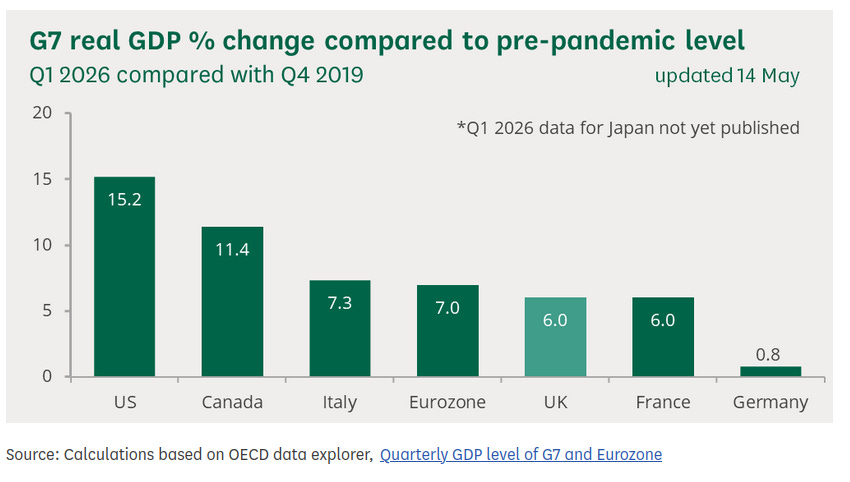
The US has grown by 15.2%. The UK has grown by only 6.0%. That is a 9.2 percentage point gap in potential national wealth that has simply vanished.
https://commonslibrary.parliament.uk/research-briefings/sn02784/
The BBC knows that per capita is the important metric, yet the rest of the article focuses exclusively on total GDP growth. If they used GDP per capita, they would have to show that the average Brit is lagging behind the rest of the developed world—the very thing they don't want the public to see.
2008-2024
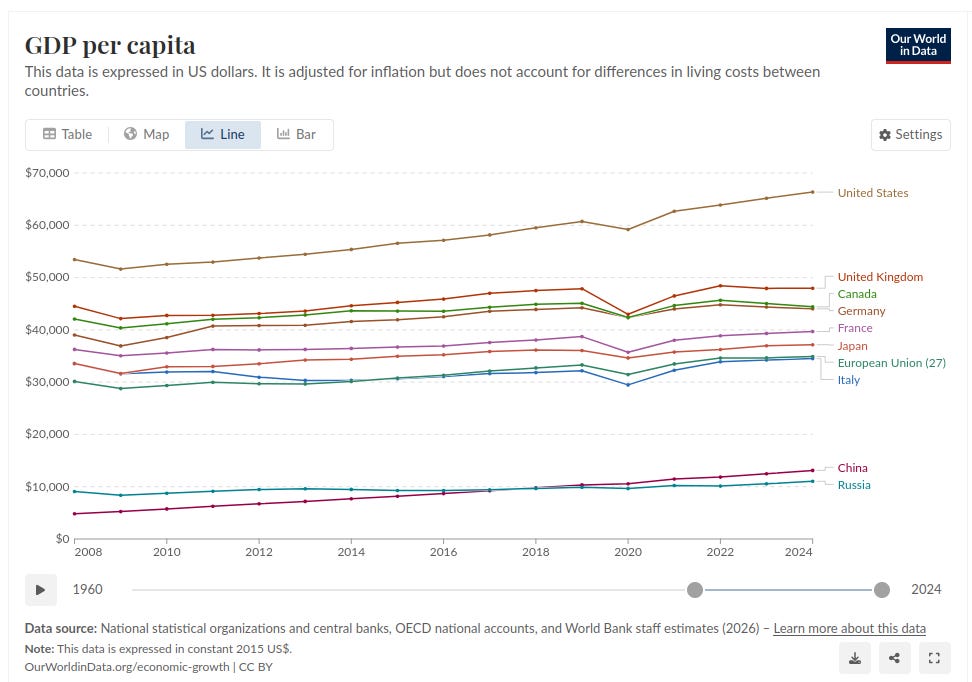
2019-2024